International students come to the UK with academic ambitions, but the reality of rising living costs, the desire to gain professional experience, and the chance to build a competitive CV means that most also want to find part-time work. Hence, working on a student visa UK becomes essential for protecting your immigration status and keeping your options open after graduation.
Working on a student visa UK is possible, but the rules are strict and the consequences of getting them wrong can be serious, particularly given the new UK immigration rules for international students in 2026. Here is what you need to know before accepting any job or volunteering commitment while studying in the United Kingdom.
- Most degree-level students can work up to 20 hours per week during term time and full time during official vacation periods, provided their university holds a track record of compliance with the Home Office.
- Below-degree-level students are generally limited to 10 hours per week during term time, while child student visa holders under 16 cannot work in the UK at all.
- Self employment, running a business, and working as a professional sportsperson or entertainer are prohibited for student visa holders, even if the work is done online or for an overseas employer.
- Breaching your visa conditions can result in visa curtailment, refusal of future applications such as the graduate route or skilled worker route, and potential problems for your university’s sponsor licence.
This article by Salam Immigration sets out the current Home Office rules under Appendix Student and Appendix Child Student as they apply in 2026. We cover practical scenarios for working on a student visa UK with clear guidance on what is allowed and what is not.
Working on a Student Visa UK: Is It Allowed?
Whether you can be working on a student visa UK (no-follow) depends on several factors: the type of visa you hold (Student versus Child Student), your age, the level of your course, and whether your student visa sponsor has a track record of compliance on the Home Office register. Not every student visa holder has the same rights, and assumptions can lead to serious problems.
Before working on a student visa UK, your first step should be to check your biometric residence permit, eVisa, or visa vignette for specific wording and understand your immigration status in the UK. Students must check specific eVisa conditions and term dates for accurate working information. You may see phrases such as “20 hours per week during term time”, “10 hours per week during term time”, or “No work permitted”. These labels are legally binding and override any general guidance you read online.
Students sponsored by an overseas higher education institution on a study abroad programme may have different conditions for working on a student visa UK.
If you are on an exchange or visiting student arrangement, you must check your individual immigration permission before accepting any job. International students cannot claim public funds or benefits while studying, so getting your work rights correct from day one matters.
Working on a Student Visa UK Hours: Term Time, Vacation Periods and Early Completion
For student visa purposes, a week is defined as any seven day period starting on a Monday and ending on a Sunday. All paid and unpaid work for all employers counts towards your total weekly working hours. You cannot average hours over a fortnight or a month; each individual seven day period starting on Monday is assessed separately.
Term-time limits for Working on a Student Visa UK
The limits during term time are straightforward in principle:
| Course Level | Sponsor Type | Weekly Limit |
| Degree level or above | University with track record | Up to 20 hours per week |
| Below degree level | Provider with track record | Up to 10 hours per week |
| Any level | Provider without track record | No work permitted |
| Child Student (aged 16-17) | Independent school with track record | Up to 10 hours per week |
Students studying at degree level can be working on a student visa UK up to 20 hours per week during term time. Students studying below degree level are generally limited to 10 hours per week during term time. Students can work 10 or 20 hours per week during term time depending on their course level, and the hourly limit applies to total hours worked across all jobs, not per employer. If you have more than one employer, you must add all your working hours together.
The term “term time” includes periods when students are expected to study. This is broader than many students realise. It is not limited to weeks when you have lectures or seminars. Exam periods, resit windows, and dissertation-writing periods all typically count as term time. For most 12-month masters students, the summer dissertation period is still classified as term time by the university, meaning the 20-hour cap continues to apply even after lectures end.
Vacation periods for Working on a Student Visa UK
Full-time work is allowed outside term time for students whose visa conditions permit work, and many use these periods to gain experience relevant to longer-term UK work visa options. This means you can usually work full time during:
- Winter, spring, and summer vacation periods as defined by your institution.
- The period after your official course end date, once all academic requirements are met.
However, reading weeks, informal study breaks, and bank holidays that fall during term time are not automatically vacation periods. You should obtain your institution’s official vacation dates and keep them on file to get permission for working on a student visa UK.
Early completion
Finishing exams or submitting a dissertation early does not automatically convert the remaining time into full-time working on a student visa UK permission. This is a common and potentially costly mistake. Students must rely on the official programme end date reported to UKVI by the student sponsor, not on personal study milestones, when deciding whether they can work full time. Early completion of academic work does not change your visa conditions.
What Types of Work Are Allowed While Studying?

When working on a student visa UK, you must consider both the number of hours and the type of work you do. Some kinds of work are permitted and others are completely prohibited, regardless of how many hours are involved.
Working on a Student Visa UK: Permitted Categories
The following types of paid work are generally allowed within your weekly limits:
- Part-time roles in retail, hospitality, administration, student ambassador positions, and most campus jobs.
- Paid or unpaid internships or course related work placement that fit within hour limits and are not classed as self employment or business activity.
- Remote work for an overseas employer, provided it is clearly an employment relationship and still within your weekly working hours. Both paid and unpaid work count towards the weekly maximum hours for students.
- Roles as a student union sabbatical officer for up to two years, which is one of the few positions where you can be working on a student visa UK in a full-time capacity during your studies.
Voluntary work vs volunteering
This distinction trips up many students who are working on a student visa UK as voluntary workers:
- Voluntary work usually involves a contract, set duties, fixed shifts, and a responsibility to turn up. Even though it is unpaid, voluntary work is considered unpaid employment and counts towards your weekly limit. Voluntary work may involve contractual obligations to perform tasks and must be tracked carefully.
- Volunteering in the true sense means helping a charity or public body without a contract, without fixed hours, and with no pay beyond reimbursement of reasonable expenses. Volunteers are not expected to have a contract or be paid for working on a student visa UK. Volunteering does not count towards work hour limits, and students can volunteer regardless of their work permissions.
If a role is described as “volunteering” but involves a contract and set shifts, it is likely voluntary work under immigration law. Does unpaid work count towards your limit? Yes, if there is any contractual element. Always ask the organisation whether you will have a contract or fixed shifts before you start working on a student visa UK.
Prohibited work
If you’re considering working on a student visa UK, remember the following are prohibited for all student visa holders, regardless of hours:
- Self employment: students cannot be self employed under a Student visa. No freelancing, consultancy, gig-platform driving, or invoicing clients as an independent contractor. You must not file a self-assessment tax return as self employed or run your own business.
- Business activity: students cannot engage in business activity while on a student visa. This includes being a director of a UK company or holding a significant beneficial interest in a trading entity.
- Professional sportsperson or sports coach: working as a professional sportsperson is prohibited for students, including coaching roles where income or sponsorship is involved.
- Entertainers: students cannot work as entertainers under UK visa rules, including paid performances as actors, musicians, or dancers.
- Permanent full-time jobs: permanent full-time jobs are not allowed for student visa holders, except in the limited circumstances described in the section on switching to the Skilled Worker route below.
At Salam Immigration, we can review job offers, internship agreements, and casual work arrangements to confirm they are compatible with working on a student visa UK before you sign a contract and risk breaking immigration law.
After Study: From Student Visa to Graduate Route or Skilled Worker Route
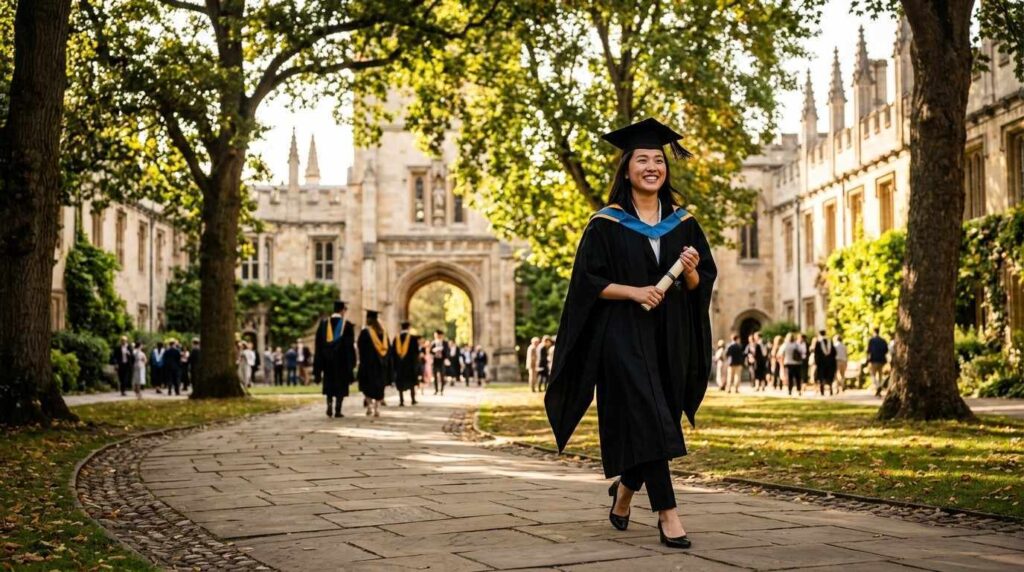
Working on a student visa UK is usually only one stage of a longer immigration journey. Many students want to stay on to work in the UK under the graduate route or skilled worker route after completing their course, and the decisions you make during studies can affect your eligibility for UK work visa pathways.
The Graduate route
The Graduate visa is available to many students who have successfully completed an eligible qualification with a licensed student sponsor. Here are the key points:
- The Graduate visa allows work for up to 2 years for most qualifications. Doctoral graduates can stay for up to 3 years.
- You must apply after receiving your final results. Applications submitted before successful completion will not be accepted.
- You can work at any skill level on this visa, giving you broad flexibility across the UK job market, including self employment and voluntary work.
- You cannot work as a professional sportsperson on this visa; that restriction carries over from the student route.
- For applications made by 31 December 2026, the two-year duration applies. From 1 January 2027, non-doctoral graduates will receive 18 months instead.
It is worth noting that the official end date and official programme end date reported by your student sponsor to UKVI is what determines your eligibility window.
The Skilled Worker route
The skilled worker route requires a job offer from a licensed sponsor at the correct skill and salary level, and the detailed UK Skilled Worker visa requirements should be understood before you commit to an employer. Students who have made a valid application for the skilled worker visa while still holding student permission may, in limited circumstances, begin working in a full time permanent vacancy up to three months before the course completion date. This applies only to students studying full time at degree level or above at an institution with a track record.
Timing and early completion
Do not start full time employment based only on early submission of assessments. The completion date that matters is the one your institution reports to UKVI, not the date you handed in your last piece of work. Obtain written confirmation from your university before making any application.
At Salam Immigration, we advise on eligibility for the graduate route, including cases where students have repeated years, changed course, or have gaps in academic engagement remaining on their record. We also review whether the UK Innovator Founder visa route might be suitable for entrepreneurial graduates who want to start their own business after switching from student permission.
How Salam Immigration Helps with Working on a Student Visa UK
At Salam Immigration, we are a nationwide UK immigration law firm focused on delivering clear, practical advice to students and education providers on working in the UK, including specialist support from our immigration solicitors in London. Our team of over 20 fully accredited immigration lawyers operates from offices across the country and is available for remote consultations by phone or online.
Our advisers undergo regular training and keep up to date with frequent rule changes affecting international students, including updates to Appendix Student and sponsor guidance. We have experience handling cases involving UK visas across every major student route.
If you need further details of working on a student visa UK or further guidance on specific visa categories, speak to our immigration team.
FAQs: Working on a Student Visa UK
Can I work full time after submitting my dissertation or final exams?
Submission of a dissertation or final exam does not immediately change your conditions for working on a student visa UK. Full time work is usually only allowed after the official course end date that the student sponsor has reported to UKVI. Many masters students assume that once they submit their dissertation, they can work unlimited hours, but the course end date on your CAS is what determines your rights.
Check your CAS or official confirmation from your institution for the course end date. The additional time granted on the visa after that date is a post-study “grace” period where full-time work is normally allowed, but you should verify this with your university’s compliance office.
Can I be self employed or freelance while I am on a Student visa?
Most students are not allowed to be self employed, freelance, or run their own business while on a Student visa, whether the client is in the UK or overseas. This is one of the clearest prohibitions in immigration law.
Practical examples of prohibited activities include:
- Driving for app-based taxi or delivery services as an independent contractor
- Running an online shop registered as a business
- Invoicing clients as a freelancer through a personal company or sole trader registration
- Holding a significant beneficial interest in a UK trading company
Even one self-assessment tax return marking you as self employed can damage your immigration track record and cause problems when you later apply under the graduate route or skilled worker route.
What happens if I accidentally work too many hours in a week?
Working on a student visa UK beyond the permitted hours or doing prohibited types of work is a breach of visa conditions. Exceeding permitted hours can lead to visa cancellation and restrictions on future entry to the UK. It is a breach of visa conditions to exceed permitted working hours, even if the breach was accidental or driven by an employer’s scheduling error.
If you realise you have made an honest mistake:
- Stop any excess work immediately.
- Keep detailed records of what happened, including payslips, rotas, and correspondence with the employer.
- Seek legal advice quickly. Do not wait for UKVI to contact you.
- Avoid repeating the breach under any circumstances.
Stay Compliant with UK Student Visa Regulations
Visa · Settlement · Legal Support