Applying for the right visa is one of the most important steps for families who want to live together in the United Kingdom. The UK family visa category allows a family member, such as a spouse, parent, or dependent relative, to join their loved ones who are settled or have lawful status in the country.
However, the family visa process is a challenging and detail-oriented procedure that requires careful preparation, a thorough understanding of evolving rules, and meticulous evidence collection. Strict eligibility rules, financial requirements, and documentation standards must be met, and even small errors can result in delays or refusals.
For many applicants, the ultimate goal after securing a family visa is to qualify for indefinite leave to remain (ILR), which grants permanent residency rights in the UK.
To begin, your family member typically needs to complete an online application form, accurately providing personal details, supporting evidence, and biometric data. The application can be submitted online either by themselves or with assistance, and they must provide their email address for communication from the Home Office.
This guide provides a comprehensive breakdown of how to apply for family visa UK, what requirements you must meet, and how the route leads towards indefinite leave.
Understanding the UK Family Visa Route
Before you begin to apply for family visa UK, understand what this visa is designed for and who it covers. The UK family visa is part of the immigration system that allows non-British citizens to live in the UK with their family members, provided they meet the eligibility criteria.
These criteria vary depending on your relationship to a British citizen, a settled person (someone with indefinite leave to remain or permanent residence), or a person with refugee status or humanitarian protection in the UK.
Additionally, if you are a family member of an EU, EEA, or Swiss citizen already residing in the UK, you may be eligible to apply under the EU Settlement Scheme as an alternative pathway.
Who Can Apply for a UK Family Visa?
The family visa route is open to a range of family members, including spouses, partners, children, parents, and dependent relatives. Specifically, you can apply for a UK family visa if you are:
- Spouses or partners of British citizens or settled persons. This includes those in a marriage or civil partnership, and you will need to provide a marriage or civil partnership certificate as supporting evidence for a marriage visa.
- Fiancés or proposed civil partners, if you plan to marry or enter into a civil partnership in the UK within six months.
- Children under 18 years old, including adopted children. To prove your relationship, you must provide birth certificates or adoption papers, with certified translations if not in English.
- Parents of children who are either British citizens or have settled status in the UK.
- Adult dependent relatives who require long-term care from family members settled in the UK. This falls under the dependent relative visa category, designed for those who cannot be adequately cared for in their home country.
Dependent relative visas and dependent visas are available for certain family members who are financially dependent or require long-term care. When applying, you must provide supporting documents to prove your relationship, such as marriage or civil partnership certificates, birth certificates, and tenancy agreements to show suitable accommodation.
For unmarried partners, evidence of cohabitation is required, such as joint utility statements, tenancy agreements, or GP letters.
Duration of Stay
Depending on the type of family visa granted:
- Spouse, partner, and parent visas are usually granted for 2 years and 9 months (33 months if applying from outside the UK, or 30 months if applying from inside).
- Fiancé visas are granted for 6 months, with the expectation that you will switch to a spouse or partner visa after marriage.
- Children’s visas are generally granted in line with the parent’s visa.
Link to Indefinite Leave to Remain (ILR)
Most applicants who successfully apply for family visa UK will eventually be eligible to apply for indefinite leave to remain (ILR) after a qualifying period, typically five years, provided all requirements continue to be met. This settlement status removes time restrictions and allows you to live permanently in the UK.
The UK government has proposed extending this qualifying period to 10 years, though this change has not yet been implemented.
Financial Requirements (Updated for 2026)
From 11 April 2024, the minimum income requirement to apply for family visa UK (as a partner, spouse, fiancé, or civil partner) was raised to £29,000 per year, regardless of whether you are applying with dependent children. This is a flat-rate threshold intended to ensure applicants can support their families without requiring additional child-related funds.
Meeting this requirement also involves passing the adequate maintenance test, which demonstrates that you have sufficient financial resources to support your family without recourse to public funds.
If your initial family visa application was submitted before 11 April 2024, or you are applying for an extension or settlement on the same five-year route, then the previous requirement continues to apply, namely:
- £18,600 per year, plus
- £3,800 for the first dependent child, and
- £2,400 for each additional child, up to a maximum of £29,000.
To meet the financial requirement, financial support from the UK-based sponsor is essential. If the sponsor’s income falls short of the minimum income requirement, cash savings can be used to make up the difference, with a total of £88,500 required if there is no income at all.
When applying, the sponsor must provide comprehensive financial evidence, including bank statements, payslips, and employment letters, to prove they meet the financial requirement.
Additionally, applicants must show that dependent children under 18 are financially supported and not living independently. It is also necessary to demonstrate adequate accommodation in the UK that meets required standards, ensuring you will not rely on public funds for housing.
Current Status and Potential Changes
As of 2026, the minimum income requirement remains £29,000 per year following the MAC review. Planned increases to a higher threshold (including proposals up to £38,700) have been paused and are not currently in force.
How to Apply for Family Visa UK
When preparing to apply for family visa UK, understanding the family visa application process is crucial. This step-by-step legal and administrative journey involves evaluating eligibility, preparing documentation, and receiving expert guidance to ensure a smooth and successful outcome. The application process for a UK family visa requires careful attention to each stage, as missing a step or submitting incomplete documents can result in costly delays or refusal.
Below is a structured guide to the UK family visa application process for applicants:
Step 1: Determine the Correct Visa Category
Decide whether you are applying under one of the UK family visa categories:
- Spouse/Partner
- Fiancé or Proposed Civil Partner
- Parent
- Child
The UK family visa system includes several visa categories, such as spouse visas, fiancé visas, child visas, and dependent relative visas, each with specific eligibility criteria. Eligibility is visa based and depends on your relationship to the UK sponsor.
Step 2: Gather Documentation
Before starting the online application, collect the following documents as necessary evidence:
- Passports and travel history.
- Proof of relationship (marriage certificate, photos, joint bank statements).
- Financial documents (payslips, bank statements, savings proof).
- English language test certificate (if required).
- Evidence of accommodation.
Any document not in English or Welsh must be accompanied by a certified translation, as the Home Office will not accept untranslated paperwork.
Step 3: Complete the Online Application
- Visit the UK Government Visa and Immigration Portal.
- Select the relevant family visa category from UK Government Visa and Immigration Portal.
- Complete the online application form accurately, ensuring all personal details, supporting evidence, and biometric data are correct—this form is a crucial step in the process, and consistency is key, as discrepancies can cause credibility issues.
Step 4: Pay Fees and Immigration Health Surcharge
Applicants must pay:
- Visa application fee (varies by category).
- Immigration Health Surcharge (IHS), which allows access to the NHS during your stay.
As of April 2026, UK visa application fees for family routes (including spouse/partner visas) have increased. The standard out-of-country spouse visa fee is now approximately £2,064 (increased from previous rates). The Immigration Health Surcharge (IHS) remains a separate mandatory fee and continues to apply at the current published rate per year of stay.If you are facing financial hardship, you may be eligible to apply for a fee waiver. To qualify, you must demonstrate that you do not have enough income and savings to cover both the visa fees and essential living costs, such as food and rent.
Step 5: Submit Biometrics
You will be required to book an appointment at a designated visa application centre to:
- Provide biometric information, including your fingerprints and photograph.
- Submit supporting documents, either digitally or in person.
Most UK Visa Application Centres (VACs) now operate primarily on appointment-based biometric systems with increased digital document upload requirements before attendance. Paper submissions are significantly reduced compared to earlier years.
Step 6: Wait for a Decision
Family visa processing times can vary depending on the complexity of your case and the volume of applications. For applications made from outside the UK, the processing time is generally around 12 weeks, but this can change based on individual circumstances. If you apply inside the UK or your case is more complex, it may take up to 24 weeks.
Step 7: Receive Visa Outcome
If successful, you will receive:
If refused, you will receive a decision letter from the Home Office. This letter will explain the reasons for refusal and specify the time limit for appealing the decision, typically 14 days if you are in the UK, or 28 days if you are outside the UK.
If your application is rejected, you can either appeal the decision or make a new visa application, which requires paying the full application fee again.
Common Reasons for Refusal When You Apply for Family Visa UK
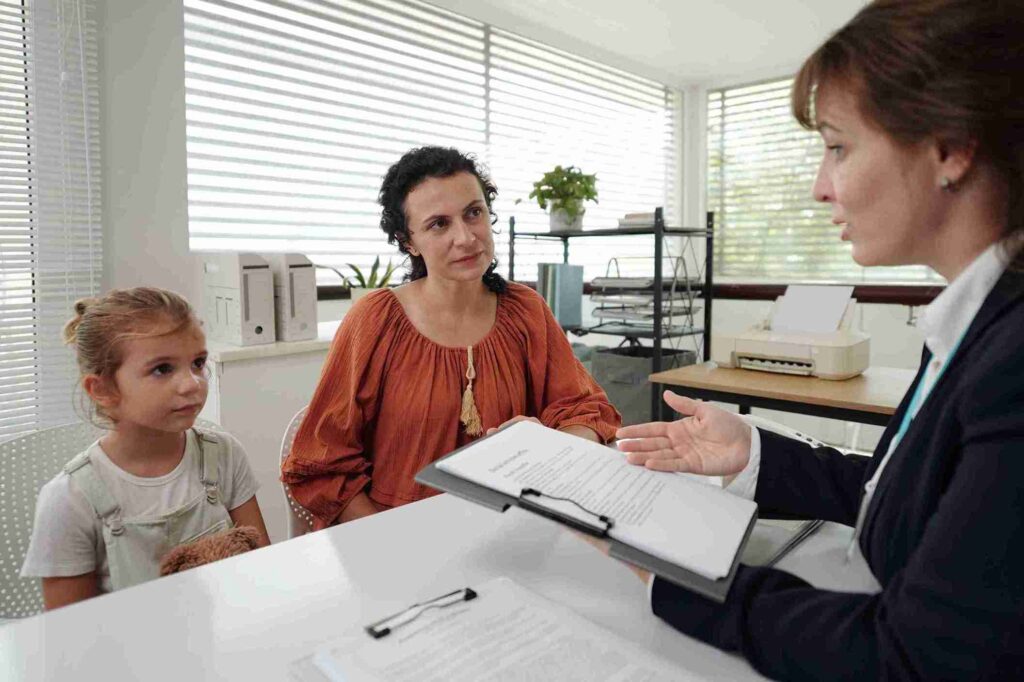
Even when applicants prepare thoroughly, the Home Office frequently refuses family visa applications due to errors, missing evidence, or unmet eligibility. In 2026, refusal rates remain high for certain categories, particularly where financial and credibility checks are concerned.
Applicants must also meet suitability requirements, which include checks on criminality, health conditions, and financial stability. Failure to demonstrate strong family ties, private life in the UK, or sole responsibility for a child can also lead to refusal. Read our blog to discover who qualifies for the Private Life visa UK route and how to apply for it Below are the most common reasons for refusal and how to avoid them:
1. Failure to Meet the Financial Requirement
- Submitting payslips or bank statements that do not cover the required six-month period.
- Using savings that have not been held for the full six months.
- Miscalculating the required income under the £29,000 threshold (or transitional rules for pre-April 2024 applicants).
Tip: Always cross-check your income and savings against the exact Home Office formula and ensure documents are in the required format.
2. Insufficient Evidence of a Genuine Relationship
- Lack of consistent proof of living together, especially for unmarried partners who must provide substantial evidence of a genuine and ongoing relationship, such as joint tenancy agreements, utility bills, or other documents showing cohabitation.
- Insufficient evidence of ongoing communication if living apart, which is crucial for both unmarried partners and those who are not currently residing together.
- Failing to provide marriage or civil partnership certificates for those who are legally married or in a civil partnership, as these documents are essential to establish eligibility for certain UK family visa categories and to demonstrate the relationship is genuine.
- Submitting photographs or documents that appear staged or selective, which may not satisfy the Home Office’s requirements for proving a genuine relationship.
Tip: Provide a wide range of documents, utility bills, tenancy agreements, council tax, and correspondence showing day-to-day shared responsibilities. Unmarried partners should focus on evidence of cohabitation and relationship history, while those who are legally married or in a civil partnership must include official certificates.
3. Errors in the Application Form
- Inconsistencies between your online application form, supporting documents, and immigration history can lead to refusal. Errors or inconsistencies in the online application form, such as incorrect personal details, missing supporting evidence, or inaccurate biometric data, may result in your application being rejected.
- Mistakes in details such as names, addresses, or employment records.
Tip: Review your application multiple times before submission and ensure all details match across documents.
4. English Language Requirement Failures
- Submitting an expired English test certificate.
- Failing to pass an approved English language test (Secure English Language Test, or SELT) at the required level (A1 or higher for initial applications, A2 for extensions, or B1 for ILR), unless you are exempt because you are a national of a majority English-speaking country or hold a degree taught in English.
- Taking the wrong level of test (below A1 for initial, below A2 for extensions, or below B1 for ILR).
Tip: Always book your test with a UKVI-approved provider and confirm your level requirement before applying. If you are exempt due to your nationality or degree, ensure you provide the correct evidence.
5. Poor Immigration History
- Previous overstays, breaches of visa conditions, or fraudulent applications, including issues related to your current visa type, such as a work visa, student visa, or visitor visa, can significantly affect your eligibility to apply for a family visa UK or to switch from your existing visa category.
- Gaps in lawful residence or excessive absences from the UK may also impact your application, especially if you are seeking to switch from a student visa, work visa, or visitor visa to a family visa.
Tip: If you have a poor history, seek legal advice before applying, as some breaches may allow for discretion, while others carry severe consequences.
Tip: Double-check all fees, documents, and category requirements before submission.
6. Incorrect Payment or Missing Documents
- Submitting the wrong online application form can result in refusal, as the form must be accurately completed with all required personal details and supporting evidence.
- Not paying the correct application or Immigration Health Surcharge fee.
- Failing to upload mandatory evidence at the UKVCAS stage.
Tip: Double-check all fees, documents, and category requirements before submission.
Tips for a Successful Application to Apply for Family Visa UK
Applying for a family visa is not just about filling out a form — it requires careful preparation, compliance with strict Home Office standards, and well-organised evidence. For some applicants, demonstrating continuous residence in the UK or considering a private life application may also be relevant, especially if you have established strong ties or face challenges returning to your country of origin. Below are key steps to improve your chances of approval:
Make sure you understand the rights and restrictions for family visa holders, including work eligibility, access to public funds, and the process for extending your visa. This knowledge will help you plan your stay and avoid common pitfalls.
1. Start Preparing Early
- Collect payslips, bank statements, tenancy agreements, and other required documents at least six months in advance.
- Ensure your savings (if relied upon) are in the account for the minimum required period.
2. Double-Check the Financial Requirement
- Confirm whether you are applying under the new £29,000 threshold or a transitional rate.
- If combining income and savings, use the Home Office calculation method rather than estimates.
3. Strengthen Evidence of Relationship
- Submit a wide variety of documents to prove a genuine and subsisting relationship, such as evidence of cohabitation, shared financial responsibilities, and ongoing communication. Demonstrating strong family ties, such as regular contact, emotional support, and joint commitments, can significantly strengthen your application.
- Where living apart, include communication logs, travel records, and family photographs with context. For applicants proving a relationship with children, birth certificates or adoption papers are required, and if these documents are not in English, certified translations must be provided. If your child has lived in the UK for at least seven years, this can be important for certain visa routes, especially where it would be unreasonable to expect them to leave.
4. Use Professional Translation Where Needed
- Non-English documents (marriage certificates, birth records, etc.) must be translated by certified professionals.
- Failing to do so may result in rejection even if the document itself is valid.
5. Ensure Correct English Language Test
- Take the right level of English test (A1, A2, or B1 depending on the stage of your application).
- Book with a UKVI-approved test centre only.
6. Organise Your Application Logically
- Upload documents in the order requested by UKVI.
- Clearly label each file to avoid confusion at the assessment stage.
7. Consider Priority or Super Priority Service
- If you need a faster decision, consider paying for priority services (where available), which may reduce waiting times significantly.
8. Seek Professional Legal Advice
- Immigration rules are constantly updated, what was correct in 2025 may already be outdated in 2026 and what is correct now will be outdated in the next year.
- An immigration solicitor can identify risks, prepare your case strategically, and communicate with UKVI on your behalf. Legal advice is especially important if your case involves exceptional circumstances or domestic abuse, as these situations may allow for waivers or special considerations under UK immigration rules.
Appealing or Reapplying After a Family Visa Refusal

A refusal can feel devastating, especially when it affects your ability to live with your family in the UK. However, it is not always the end of the road.
The application process for appeals or reapplications generally follows similar steps as the initial family visa application process, including evaluating eligibility, preparing documentation, and ensuring all requirements are met.
Understanding your legal options and the family visa application process is essential to protecting your rights and pursuing your case effectively.
1. Right of Appeal
- Most family visa refusals grant a right of appeal under human rights grounds (Article 8 – right to family life).
- Appeals are heard at the First-tier Tribunal (Immigration and Asylum Chamber), where an independent judge reviews the case.
- Applicants should be ready to present strong documentary evidence and possibly attend a hearing.
2. Administrative Review
- If the refusal is based on a caseworker error (e.g., misinterpretation of financial documents), you may request an administrative review instead of a full appeal.
- This is usually quicker but limited, as UKVI will only correct factual or procedural mistakes rather than reassess the whole application.
3. Judicial Review
- If there is no right of appeal, you may still challenge the decision through judicial review in the High Court.
- Judicial review focuses on whether UKVI acted unlawfully or unreasonably in making the decision.
4. Reapplying After Refusal
- Sometimes, it is more effective to reapply with corrected documents rather than appeal.
- For example, if refusal was due to missing payslips or outdated bank statements, a fresh application may be the fastest solution.
5. Importance of Legal Advice
- Family visa refusals can be complex and emotionally charged.
- A solicitor can assess whether appeal, review, or reapplication is the best course of action and help build a robust case.
Apply for Family Visa UK with Expert Guidance
Applying for a family visa UK or moving towards Indefinite Leave to Remain (ILR) in 2026 requires careful preparation, compliance with updated requirements, and expert guidance. From meeting financial thresholds to proving genuine relationships, every detail matters.
Equally, for professionals in the digital sector, understanding the evolving landscape of UK immigration is essential. Whether you’re applying under a family route or exploring opportunities through the Global Talent framework, aligning your application with current policy is key to long-term settlement.
With Salam Immigration on your side, you don’t just submit an application.Yyou build a strong, credible case that maximises your chances of success.
Contact Salam Immigration today to begin your journey towards joining your loved ones in the UK with confidence.
FAQs: Applying for a Family Visa or ILR
Who is eligible for a family visa?
You may be eligible for a UK family visa if you want to live with a spouse or partner, fiancé(e), child, parent or eligible relative in the UK. Specific eligibility requirements depend on your relationship and circumstances.
How do you apply for a family visa online?
Family visa applications are generally made online through GOV.UK, whether you are applying from inside or outside the UK. You will need to provide the required documents and evidence relevant to your route, such as relationship, financial and English language evidence for a successful application.
How long does an indefinite leave to remain application take?
For most ILR applications by family visa holders, the standard service usually gives a decision within 6 months after you have provided your biometrics. Some applicants may be eligible to pay for a faster service, such as the super priority service.
What are the new rules for indefinite leave to remain in 2026?
The Government has announced Earned Settlement reforms, including a proposed increase in the standard settlement period from 5 to 10 years. However, the new framework is being developed and the existing Immigration Rules continue to apply until the relevant changes come into force. Understand ILR processing time including the six-month standard service, priority options, possible delays and when the decision clock starts.
How much does it cost to apply for indefinite leave to remain?
From 8 April 2026, the ILR application fee is £3,226 per person, including applicants on family routes. Additional costs may apply if you choose an optional faster service.
Start your journey to bring family closer—apply today with expert guidance
Visa · Settlement · Legal Support