Applying for a UK visa can be an exciting step, whether you are planning to visit family, start a new job, begin an English language course, or settle permanently in the United Kingdom. However, one question almost every applicant asks is: how long will the decision take?
Understanding the UK visa processing time helps applicants prepare supporting documents, plan their intended travel date, and avoid unnecessary stress. While UK Visas and Immigration publishes service standards for many visa categories, actual waiting times can vary depending on several factors, including the visa category, current volume of applications, individual circumstances, and whether the application is made inside or outside the UK.
For most straightforward cases, UK visa processing times typically take 3 weeks outside the UK and 8 weeks inside the UK. However, complex applications may require additional checks or interviews prolonging processing times. Delays can also occur when applicants submit incomplete supporting documents, provide incorrect information, or receive requests for further evidence from UKVI.
At Salam Immigration, our immigration lawyers regularly assist individuals, families, and businesses with visa applications, extensions, appeals, and settlement matters. With more than 23,726 applications successfully handled, our team helps clients navigate immigration rules while reducing the risk of delays caused by avoidable mistakes.
In this guide, we explain the latest UK visa processing time expectations for 2026, how processing times are calculated, what priority services are available, and what steps applicants can take if their application exceeds published timelines.
UK Visa Processing Time 2026: Quick Overview
Although processing times vary depending on the visa category, UKVI publishes standard customer service standards for many of the most common visa types.
The standard processing time for visitor visas is 3 weeks. Most UK Standard Visitor Visa and transit visa applications submitted outside the UK are typically processed within this timeframe, provided there are no requests for further information.
Below is a general overview of current UK visa processing time expectations:
UK Visitor Visa Processing Time
Standard Visitor visas usually take 3 to 6 weeks as per current processing times. The official service standard for straightforward visitor visa applications remains three weeks from biometric information submission.
Skilled Worker Visas
Skilled Worker visa applications usually take 3 weeks to process when submitted outside the UK, reflecting typical UK work visa service standards. Applications made inside the UK for extensions or switching routes generally take up to 8 weeks.
Student Visas
Student visa applications, including those attending an independent school or higher education institution, are generally processed within three weeks when submitted overseas, provided the UK Student Visa requirements are met and supporting documents are complete.
Family Visa Applications
Family visa applications typically take up to 12 weeks. This includes spouse, partner, parent, and child visa routes submitted from outside the UK, which are common options for moving to the UK with family. Spouse visa UK processing time is several weeks as visa application process is more complex in it.
Settlement Applications
Applications for indefinite leave and other settlement routes often require longer UK visa processing timedue to consideration periods. Family and Settlement visas can take 12 to 24 weeks for processing depending on complexity and current caseload.
UK Ancestry Visa Applications
UK Ancestry applications are commonly processed within three weeks when submitted outside the UK, while extension applications submitted inside the UK normally follow the 8-week standard processing time.
Important Considerations for UK Visa Processing Time
It is important to remember that published UK visa processing time are targets rather than guarantees. High application volumes can lead to longer processing times. Visa processing times can be significantly impacted by seasonal demand peaks, especially during summer travel periods and university intake seasons.
Applicants should also be aware that UKVI calculates UK visa processing time from the day after the biometrics appointment. Processing starts after biometric submission or ID verification. Processing ends when you receive a decision email or letter. To avoid problems, applications can usually be submitted 3 to 6 months before travel or current visa expiry, allowing sufficient time for a decision before the intended date of travel or visa expiration.
If you are relying on a visa approval to start employment, commence studies, or join family members in the UK, building extra time into your plans remains one of the safest approaches.
How UK Visa Processing Times Work
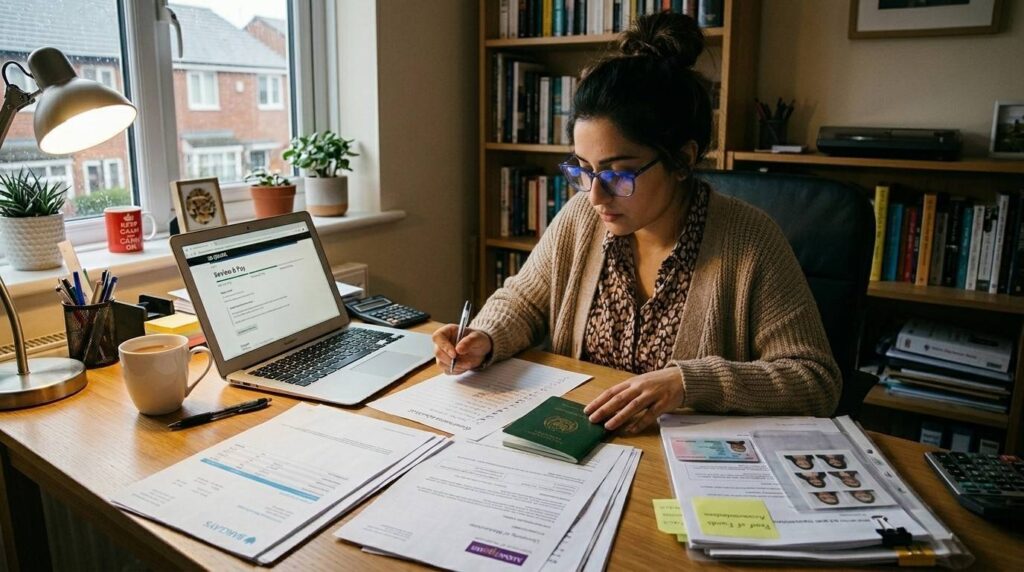
One of the most misunderstood aspects of the UK visa processing time is how UK Visas and Immigration (UKVI) actually measures the processing period. Many applicants assume the clock starts when they complete the online application, but this is not usually the case.
Understanding the official process can help applicants manage expectations and avoid confusion when tracking an immigration application.
When Does UK Visa Processing Start?
For most visa types, processing starts after biometric information submission. In practical terms, this means the UK visa processing time normally begins once the applicant attends a biometric appointment at a visa application centre or completes identity verification through the UK Immigration: ID Check app.
Biometric appointments must be completed for processing times to officially begin. UKVI calculates processing times from the day after the biometrics appointment, not from the date the online application is submitted or the application fee is paid.
For applicants applying outside the UK, this usually involves:
- Completing the online application
- Paying the relevant application fees
- Booking an appointment at a visa application centre
- Providing biometric information
- Submitting supporting documents
Only after these steps are completed does the formal UK visa processing time begin.
For some in-country applications, applicants may be able to verify their identity digitally without attending a physical appointment. Where available, this can simplify the process and reduce administrative delays.
When Does UK Visa Processing End?
The UK visa processing time ends when UKVI makes a decision and communicates it to the applicant.
Processing ends when you receive a decision email or letter. For overseas applications, there may be an additional waiting period while travel documents are returned and arrangements are made for passport collection.
Increasingly, UKVI is moving towards digital immigration status records. UKVI is phasing out physical passport vignette stickers in favour of digital-only eVisas. As a result, many successful applicants will rely on digital proof of their immigration status rather than physical documentation.
Factors That Affect Processing Times
Although UKVI publishes service standards for many visa categories, actual timelines can vary depending on several factors. Common causes of delays include:
- Missing supporting documents
- Requests for additional evidence
- Incorrect information on the application
- Security and background checks
- Verification of employment or financial records
- High application volumes during peak periods
- Complex immigration histories
- Applications involving private life or human rights considerations
Delays in UK visa processing time can occur due to requests for additional evidence. Incorrect information can extend processing times significantly. Complex applications lack published service standards, meaning decisions may take considerably longer than standard cases.
Applicants should therefore ensure that all documents are accurate, complete, and submitted promptly. Even a small discrepancy in contact details, financial records, or travel history can result in additional scrutiny from the Home Office and increase the overall UK visa processing time.
Applying From Outside the UK vs Inside the UK
The UK visa processing time often depends on where the application is submitted. UK Visas and Immigration operates different service standards for applicants applying outside the UK and those already living in the country.
Understanding this distinction is important because processing routes, eligibility requirements, and waiting periods can differ significantly.
Applying Outside the UK
Most first-time visa applicants submit their immigration application from outside the UK. These are commonly referred to as out of country applications and are frequently supported by immigration solicitors in London. This route applies to many visa categories, including:
- UK Standard Visitor Visa
- Skilled Worker Visa
- Student Visa
- Family visas
- UK Ancestry Visa
- Work visas
- Transit visa applications
Applicants typically begin by completing an online application and paying the relevant fees. After submitting the application online, the applicant attends a biometric appointment at a visa application centre to provide biometric information and submit supporting documents.
For most overseas applications, the UK visa processing time is relatively predictable. Standard processing time for visitor visas is three weeks. Skilled Worker visa applications usually take 3 weeks to process. Family visa applications typically take up to 12 weeks.
However, UK visa processing time may vary depending on the country where the application is made. Demand levels, local operational capacity, document verification requirements, and current volume can all influence how quickly applications are processed.
Applicants should also avoid making irreversible travel arrangements until a decision has been received. Although published timelines provide useful guidance, UKVI cannot guarantee that every application will be decided within the standard service standard.
Applying Inside the UK
Individuals who already hold valid immigration status may be eligible to submit an application from within the United Kingdom, with help from local experts such as immigration solicitors in Birmingham. In-country applications commonly include:
- Skilled Worker visa extensions
- Student visa extensions
- Spouse and partner visa extensions
- Settlement applications
- Switching between eligible visa routes
Extensions and Switching visas typically take 8 weeks to process. In-country spouse visa applications are processed within 8 weeks in most straightforward cases.
The ability to switch visa categories from inside the UK depends on the immigration rules governing the route. While many work and family routes permit switching, some visa holders must leave the UK and submit a fresh application overseas.
Applicants should always confirm eligibility before applying. Submitting an application under the wrong route can lead to delays, refusals, or requests for further information.
Which Route Is Faster?
Many applicants assume that applying from inside the UK guarantees a quicker decision. In reality, this depends on the visa category and individual circumstances.
UK visa processing times typically take 3 weeks outside the UK and 8 weeks inside the UK for standard applications. While overseas visitor visa applications are often decided relatively quickly, family and settlement routes may require substantially longer consideration periods regardless of where they are submitted.
The most important factor is ensuring that applications submitted are complete, accurate, and supported by appropriate evidence. Missing documents, incorrect information, or requests to provide evidence after submission can increase the UK visa processing time and lead to avoidable delays.
Priority and Super Priority Visa Services to Reduce UK Visa Processing Time

For applicants who require a faster decision, UK Visas and Immigration offers premium processing options on many visa routes. These services can significantly reduce the standard UK visa processing time, although they do not influence the outcome of an application.
It is important to understand that priority services provide accelerated consideration of an application, not preferential treatment. Every application must still satisfy the relevant immigration rules and evidential requirements.
What Is the Priority Visa Service?
The Priority Visa Service is designed for applicants who need a decision sooner than the standard processing timeline.
Priority service is available for most visa types overseas. UK priority visa processing time is 5 days. In practice, priority service decisions are made within five working days from the point that processing officially begins. For many applicants, this can reduce waiting times considerably compared to standard UK visa processing time.
The service is commonly available for:
- Skilled Worker visa applications
- Student visa applications
- Visitor visa applications
- Certain family visa routes
- Other eligible work visas
Because availability can vary depending on the visa category, application location, and operational capacity, applicants should always check whether the service is offered before submitting their application.
What Is the Super Priority Visa Service?
The Super Priority Visa Service is the fastest processing option offered by UKVI. Super priority service provides decisions by the next working day. In straightforward cases, applicants may receive a decision within one working day after their biometric appointment or identity verification has been completed.
The super priority service aims to provide an accelerated decision-making process for eligible applicants whose circumstances require urgent consideration. However, applicants should be aware that not all visa categories qualify for this service.
Importantly, Super priority service is suspended for new family visa applications. Availability may also be restricted for certain complex routes where additional assessment is required.
Additional Costs and Eligibility Requirements
Priority and super priority services incur additional fees. These charges are paid on top of the standard visa application fee and any immigration health surcharge that may apply. The priority service aims to reduce waiting times through expedited processing, while the super priority service aims to deliver the fastest available decision timeframe.
Applicants should consider whether the additional fee represents good value based on their intended travel date, employment start date, educational commitments, or family circumstances. The exact super priority service fee changes periodically and should always be checked at the time of application.
Does Priority Service Guarantee Approval?
A common misconception is that paying for expedited processing increases the chances of a successful outcome. This is not the case. Priority services only provide faster processing. Applications are assessed against the same legal requirements and immigration rules as standard applications.
If supporting documents are missing, if UKVI requests further evidence, or if concerns arise regarding eligibility, the application may still take longer than expected. Complex applications may require additional checks or interviews prolonging processing times, even where a premium service has been purchased. Applicants should therefore focus on submitting a complete and accurate application rather than relying solely on faster processing options.
For many straightforward cases, priority services can be extremely useful. However, ensuring the application is prepared correctly remains one of the most effective ways to avoid unnecessary delays and reduce the overall UK visa processing time.
What to Do If Your UK Visa Is Taking Longer Than Expected
Waiting beyond the published UK visa processing time can be frustrating, particularly when travel plans, employment opportunities, studies, or family arrangements depend on a decision. While many applications are decided within standard service standards, delays do occur.
Understanding the available options can help applicants take appropriate action while avoiding unnecessary stress.
Check Whether the Published Processing Time Has Passed
Before contacting UKVI, it is important to confirm whether your application has actually exceeded the relevant processing timeframe.
Many applicants become concerned after only a few weeks, even though their application remains within the normal service standard for that visa category. For example:
- Standard processing time for visitor visas is 3 weeks.
- Skilled Worker visa applications usually take 3 weeks to process.
- Family visa applications typically take up to 12 weeks.
- Extensions and Switching visas typically take 8 weeks to process.
- Family and Settlement visas can take 12 to 24 weeks for processing.
Applicants should calculate the waiting period from the day after their biometric appointment or identity verification, as this is when UKVI officially starts counting the UK visa processing time.
Request an Update From UKVI
If your application has exceeded the published UK visa processing time, you may request an update on your application status.
Contact UKVI if your application exceeds processing times. In many cases, UKVI may be able to confirm whether the application remains under active consideration or whether additional checks are being carried out. When making an enquiry, it is useful to have:
- Application reference number
- Passport details
- Contact details
- Date of biometric submission
- Visa category information
Providing complete information can help reduce delays in obtaining a response.
Respond Quickly to Requests for Additional Information
A significant number of delays occur because UKVI requires clarification or supporting evidence.
Delays can occur in UK visa processing time due to requests for additional evidence. UKVI may ask applicants to provide evidence relating to employment, finances, accommodation, family relationships, travel history, or other matters relevant to the application.
Applicants should respond promptly and carefully to any request for further evidence. Failure to do so may result in extended delays or, in some cases, refusal of the application.
Explain Urgent Circumstances
Where there is a genuine urgent need for a decision, applicants may be able to highlight the circumstances to UKVI. Provide evidence of urgency if your application is delayed. Examples may include:
- Serious family emergencies
- Medical situations
- Time-sensitive employment opportunities
- Academic course start dates
- Compassionate circumstances
While urgency does not guarantee faster processing, it may assist UKVI in understanding the importance of a timely decision.
Escalating Persistent Delays
If a significant delay continues without explanation, additional options may be available. You can escalate delays by contacting your MP. Members of Parliament can sometimes make enquiries with the Home Office on behalf of constituents and obtain updates regarding outstanding applications.
Judicial review may be an option for unresolved delays. This is generally reserved for cases where delays become unreasonable or where public authorities fail to make decisions within a lawful timeframe.
Concerned About Delays? Get Expert UK Visa Support Today
Navigating the UK visa process can be challenging, especially when processing times are uncertain or your application involves complex circumstances. Whether you are applying for a Skilled Worker Visa, family visa, visitor visa, settlement application, or other visas, professional immigration services can reduce the risk of delays caused by missing documents, eligibility issues, or incorrect information.
At Salam Immigration, our experienced immigration lawyers have successfully assisted thousands of applicants with UK visa applications, extensions, appeals, and settlement matters. Contact our immigration solicitors for clear advice tailored to your circumstances, helping you submit a strong application from the outset.
Contact Salam Immigration today to discuss your case and receive expert support for your UK immigration journey.
Get Personalized UK Visa Assistance Today
Visa · Settlement · Legal Support