A visa refusal can be a deeply stressful experience, especially when your plans to visit, study, work, or settle in the UK are on the line. Many applicants ask: What are my chances of getting UK visa after refusal? The answer depends on several factors, including the grounds for refusal, the type of visa you applied for, whether appeal rights exist, and how you choose to proceed.
At Salam Immigration, we have helped thousands of individuals navigate complex Home Office refusals and secure successful outcomes by analysing refusal reasons, preparing strong applications and exploring every legal option available. With extensive experience in UK immigration law, our solicitors apply a meticulous, evidence-led strategy to maximise your prospects.
This article will guide you through what happens when a UK visa is refused, why refusals occur, what options are open to you, when to apply for UK visa after refusal, and how to improve your chances of a successful application. By the end, you will have a structured roadmap to increase your chances of getting UK visa after refusal based on clear, expert-led guidance.
How UK Visa Refusal Works?
Receiving a UK visa rejection is discouraging after investing significant time, effort, and resources into your application. However, a UK visa rejection does not necessarily mean you are ineligible for a visa or that your journey must end here. Instead, it signals that your application did not fully meet the specific requirements or standards set by the Home Office at this time.
The first and most important step after a rejection is to carefully review your refusal letter. This document outlines the reasons for the decision and highlights which aspects of your application fell short of the UK visa requirements. Understanding the details in your refusal letter is crucial, as it provides a roadmap for addressing the issues and improving your chances of a successful outcome in future applications.
Remember, a UK visa rejection is not the end of your journey. With a clear understanding of the refusal letter and a strategic approach, you can significantly increase your chances of getting UK visa after refusal in your next application or appeal.
Data and Statistics: UK Visa Refusal and Approval Rates
Understanding the latest data on UK visa refusal and approval rates can help applicants set realistic expectations and better prepare for the application process. According to recent Home Office statistics, overall visa refusal rates vary depending on the visa category, applicant’s country of origin, and the quality of the application submitted.
For example, in the most recent reporting period, the refusal rate for standard visitor visas was approximately 13–15%, while student visas saw a lower refusal rate of around 3–5%. Work visas, such as the Skilled Worker route, typically have a refusal rate of 5–8%.
Common reasons cited in visa refusal records include insufficient funds, missing or incorrect documents, doubts about the applicant’s intentions, and previous immigration violations. The Home Office also tracks the number of appeals and administrative reviews, with a notable percentage of initial refusals being overturned when applicants provide stronger evidence or clarify misunderstandings.
These statistics highlight the importance of submitting a well-prepared application that meets all eligibility criteria and addresses any concerns raised in previous refusals. Applicants who take the time to understand the reasons behind visa refusals and seek professional advice are more likely to achieve a successful outcome.
By staying informed about current approval and refusal trends, you can better navigate the UK visa application process and improve your chances of getting UK visa after refusal.
Possible Remedies After a UK Visa Refusal and Expected Timelines
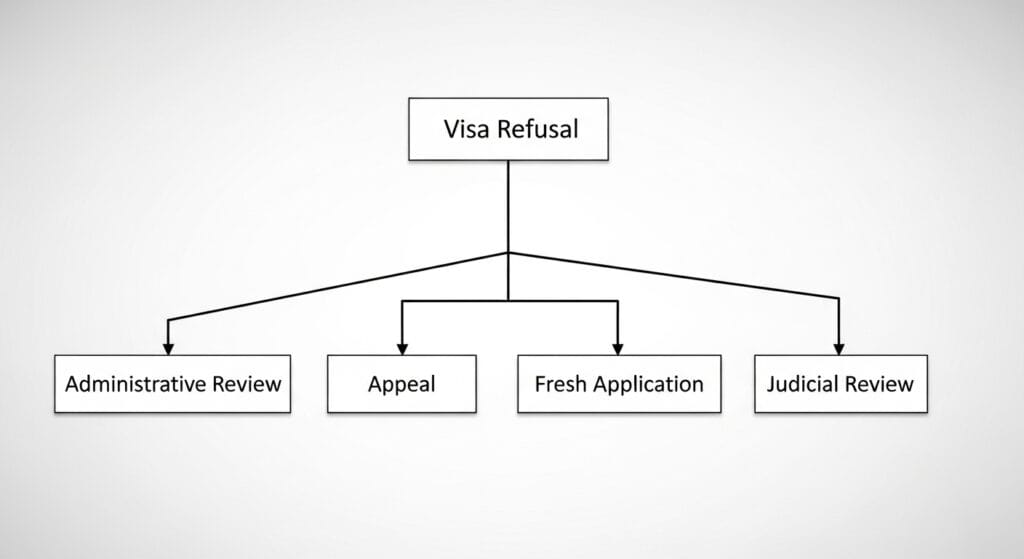
After a UK visa refusal, several legal remedies may be available to improve your chances of getting UK visa after refusal depending on the visa category, the grounds of refusal, and whether your application engages human rights or protection issues. An initial refusal does not prevent you from applying again in the future; it is important to understand the reasons for the initial refusal and address them in any subsequent application.
Not every refused application offers the same legal options. For example, a visitor visa, as well as most work visas and student visas, usually do not carry appeal rights, while family visas and human rights applications often do. The refusal letter will normally state whether you have the right to appeal, request an administrative review, or submit a fresh application.
Understanding which option applies is the first step towards realistically assessing your chances of getting UK visa after refusal.
Administrative Review: Typical Timelines
An administrative review is available where the Home Office has made a caseworking error. This option is commonly used for points-based system applications such as Skilled Worker visas. The review must usually be requested within 14 days if you are inside the UK, or 28 days if outside the UK.
Processing times vary, but most administrative reviews are decided within several weeks to a few months. While an administrative review does not allow new evidence, a successful outcome can significantly improve your chances of getting UK visa after refusal by overturning an incorrect decision.
Immigration Appeals: Timeframes and Expectations
If your refusal attracts a right of immigration appeal, you must lodge it within the strict deadline stated in the refusal notice. Appeals are typically heard by the First-tier Tribunal (Immigration and Asylum Chamber), which includes the asylum chamber for asylum and human rights cases. This independent judicial body reviews appeals against Home Office decisions, providing a formal process to address legal errors or human rights concerns. Appeals often take several months and may involve a hearing before an immigration judge. While appeals can be lengthy, with the average time to resolve appeals across all categories reaching 43 weeks as of 2024, they provide an opportunity to challenge the Home Office decision and submit evidence addressing refusal reasons.
A well-prepared immigration appeal, particularly with legal representation, can substantially increase your chances of getting UK visa after refusal. Approximately 45% of visa appeals are successful, meaning nearly half of all cases heard in court or reviewed on paper result in an approval.
Fresh Applications: When Timing Matters
In many cases, especially where no appeal rights exist, submitting a fresh application is the most appropriate option. If you and/or your immigration attorney determine that the case worker’s decision was correct, the best course of action is to do your research and reapply. There is no mandatory waiting period before reapplying, but timing is crucial. You should know after refusal of UK visa when to apply and which document to prepare for a fresh application.
Strategic reapplication, supported by stronger evidence and legal representations, is often the most effective way to improve your chances of getting UK visa after refusal.
Judicial Review and Exceptional Remedies
If your appeal to the First-tier Tribunal is unsuccessful, you may have the option of a further appeal to the Upper Tribunal if there are legal errors in the initial decision. Additionally, you may also be able to apply for a Judicial Review if your immigration solicitor believes the Home Office has incorrectly interpreted the law when refusing your application.
At Salam Immigration, we assess all post-refusal options carefully to recommend the route that offers the strongest chances of getting UK visa after refusal while minimising risk.
What to Do When You Face a UK Visa Refusal?
When faced with a UK visa refusal, your response must be structured, evidence-based, and legally informed. The actions you take at this stage directly influence your chances of getting UK visa after refusal. Many applicants damage their prospects by responding emotionally rather than strategically.
Read the Home Office Refusal Letter Carefully
The visa refusal letter is not just a notification; it is a legal document. You should read the visa refusal letter line by line and identify:
- The Immigration Rules referenced
- The factual findings made by the Home Office
- Any credibility concerns raised
- Any inconsistencies or evidential gaps noted
You must respond point-by-point to the reasons listed in your refusal letter, as simply resubmitting the same evidence usually leads to a second rejection. You must provide clear, verifiable evidence that directly counters every reason listed for the previous rejection.
Understanding these elements is essential to assessing your chances of getting UK visa after refusal, as future applications will be judged against how effectively these points are addressed.
Identify Whether You Have a Right to Appeal or Review
Not all refusals carry appeal rights. The refusal letter will state clearly whether you are entitled to:
- An administrative review
- A full right of appeal through the UK immigration appeal process, which outlines the steps to challenge a decision
- No appeal rights at all
The Entry Clearance Officer is the official responsible for reviewing your visa application and making the initial decision. If you have the right to appeal, you can initiate a UK visa refusal appeal, which involves submitting your case to the relevant tribunal as part of the UK immigration appeal process. Knowing your rights early prevents missed deadlines and ensures you choose the remedy that best supports your chances of getting UK visa after refusal.
Record the Refusal Date for Deadline Calculations
Deadlines in UK immigration law are strict. Missing them can permanently remove your right to challenge a decision. You must record:
- The date the refusal decision was made
- The deadline for appeal or review
- Whether the deadline differs depending on whether you are inside or outside the UK
If you have made a strong case for appealing and backed this up with evidence, you may receive a positive decision at the Entry Clearance Manager stage, who reviews appeal applications. Professional legal advice at this stage can help you decide whether to pursue a challenge or prepare a stronger fresh application to maximise your chances of getting UK visa after refusal.
Common Reasons for UK Visa Refusals
Understanding why UK visa applications are refused is essential to realistically assessing your chances of getting UK visa after refusal. Common reasons for UK visa refusal include lack of supporting evidence, not meeting financial requirements, and insufficient ties to the home country. The Home Office applies the Immigration Rules strictly, and even minor inconsistencies can lead to refusal if they undermine credibility or compliance. The Home Office outlines general grounds for refusal that detail factors leading to rejection, often referred to as visa refusal UK.
Typical UK Visa Refusal Grounds Under the Immigration Rules
One of the most common reasons for refusal is failure to meet the specific requirements of the visa category. Each visa route has clearly defined criteria, and applications are assessed strictly against those requirements. For example, reasons for uk spouse visa refusal will differ from skilled worker visa refusal. Common issues include insufficient evidence, failure to meet eligibility thresholds, or misunderstanding the rules applicable to the route.
Another frequent reason is credibility concerns. The Home Office must be satisfied that your intentions align with the visa you are applying for. If the caseworker believes that your stated purpose does not reflect your true intentions, this can significantly reduce your chances of getting UK visa after refusal in future applications unless addressed carefully.
Inconsistencies between documents, application forms, and previous immigration history are also a leading cause of refusal. Even small discrepancies can raise doubts about reliability and honesty.
Financial and Maintenance Requirement Failures
Financial issues remain one of the most cited refusal reasons. These include:
- Insufficient funds
- Unclear source of funds
- Irregular bank transactions
- Sudden unexplained deposits
- Lack of proper financial evidence, such as a recent bank statement
The Home Office expects applicants to demonstrate financial stability clearly and consistently. Caseworkers look for a consistent history of income in bank statements, and sudden, large deposits can be viewed as a red flag. Failure to do so often leads to refusal and negatively impacts future chances of getting UK visa after refusal.
Pathways After a UK Visa Refusal
After receiving a refusal, choosing the correct next step is one of the most important decisions you will make. The option you select will directly influence your chances of getting UK visa after refusal. There is no single solution that suits every case; the appropriate route depends on the refusal grounds, visa category, and your long-term immigration goals.
When to Request Administrative Review?
An administrative review is available where you believe the Home Office has made a caseworking error, such as misapplying the Immigration Rules or overlooking evidence that was submitted. This option is most commonly available for points-based system visas, including Skilled Worker and Student visas.
It is important to understand that an administrative review does not allow you to submit new evidence. The Home Office will only reassess the original application. Therefore, this route is suitable only where a clear error can be identified. When used appropriately, an administrative review can significantly improve your chances of getting UK visa after refusal by correcting an unjust decision.
Immigration Decision Appeal Process
The appeal process is conducted within the framework of British law, and applicants may reference the European Convention on Human Rights or other relevant international agreements if the Home Office decision is believed to breach these legal protections. The process can be lengthy, but it offers the opportunity to present arguments, evidence, and legal submissions addressing the Home Office’s concerns. A successful appeal can overturn the refusal and restore lawful status, making this a powerful option for improving chances of getting UK visa after refusal where appeal rights exist.
How to Improve Your Chances of Getting UK Visa After Refusal

Improving your chances of getting UK visa after refusal requires more than simply submitting another application. The Home Office expects applicants to demonstrate that they have fully understood and corrected the issues identified in the refusal decision. Providing strong evidence of stable employment, property ownership, or family dependents in your home country increases approval odds for UK visas and can lead to visa approval.
Address Every Refusal Reason Directly and Clearly
If the Home Office questioned your financial circumstances, you must provide clearer financial evidence. If credibility was doubted, your explanation must be consistent, logical, and supported by documents.
Ignoring even one refusal reason can significantly reduce your chances of getting UK visa after refusal, as the Home Office may conclude that the same issues remain unresolved.
Strengthen Supporting Evidence in Line with Immigration Rules
Evidence should always be submitted with reference to the relevant Immigration Rules. Submitting excessive or irrelevant documents can be just as damaging as submitting too little. The focus should be on quality, relevance, and clarity.
Well-organised and rule-compliant documentation plays a crucial role in improving chances of getting UK visa after refusal.
Prepare Professional Legal Representations
A detailed legal representation letter can significantly improve the outcome of a fresh application or appeal. Working with experienced immigration lawyers is crucial, as they can prepare strong legal representations that effectively address the Home Office’s concerns. This structured approach is proven to enhance chances of getting UK visa after refusal.
Apply at the Right Time With the Right Strategy
There is no mandatory waiting period after a refusal, but timing matters. Reapplying too quickly without resolving issues often results in repeat refusals. Conversely, waiting too long without a clear plan may delay legitimate travel or settlement goals.
Strategic timing, combined with professional guidance, ensures the strongest possible chances of getting UK visa after refusal.
Risk Mitigation Strategies for Future UK Visa Applications
Minimising the risk of a future UK visa refusal starts with a proactive and detail-oriented approach to your next application. Here are key strategies to help you avoid common pitfalls and and improve your chances of getting UK visa after refusal.
1. Address All Previous Refusal Reasons Thoroughly:Carefully review your previous refusal letter and ensure that every concern raised by the Home Office is fully resolved. Provide clear, well-organised supporting documents that directly address each point. Ignoring or inadequately addressing past issues can lead to repeated refusals and a negative pattern in your visa case files.
2. Ensure Complete and Accurate Documentation:Missing documents, incorrect forms, or inconsistencies between your application and supporting evidence are among the most frequent causes of visa refusal. Double-check that all required documents are included, up to date, and translated if necessary. Consistency across all submitted documents is essential.
3. Demonstrate Sufficient and Genuine Financial Evidence:The Home Office scrutinises financial documents to ensure you meet the financial requirements for your visa type. Provide clear bank statements, explain any large or unusual transactions, and ensure your financial situation is transparent and credible. Avoid submitting false information or documents, as this can result in a long-term ban.
4. Seek Professional Advice Early:Consulting an experienced immigration lawyer or solicitor can make a significant difference. A professional can help you interpret the Immigration Rules, prepare a robust application, and draft legal representations that address the Home Office’s concerns. This support is especially valuable if you have a history of previous visa refusals or complex circumstances.
5. Be Honest and Transparent:Any attempt to conceal information, provide false documents, or misrepresent your intentions can lead to a visa refusal and damage your future prospects. Always be truthful in your application and provide clear explanations for any issues in your immigration history.
6. Stay Up to Date with Immigration Rules:UK immigration requirements can change frequently. Make sure you are applying under the most current rules and guidance, and that your application meets all specific eligibility criteria for your chosen visa route.
By following these risk mitigation strategies, you can significantly improve your chances of getting a UK visa after a refusal and avoid common mistakes that lead to visa rejection.
Timeline, Deadlines, and Fees for Appeals and Applications
Understanding timelines, deadlines, and fees is critical to effectively planning any post-refusal action. Missing a deadline or miscalculating processing times can severely reduce your chances of getting UK visa after refusal. Careful management ensures that you retain all legal options and maximise success.
Appeal and Administrative Review Deadlines
- Administrative Review: Typically, you must request an administrative review within 14 days if inside the UK or 28 days if outside the UK from the date of refusal.
- Appeals: The refusal letter will specify the appeal deadline, which usually ranges from 14 to 28 days depending on visa type and location.
Meeting these deadlines is non-negotiable. Late submissions generally result in automatic refusal of review or appeal rights, leaving a fresh application as the only option.
Expected Processing Timelines
Processing timelines vary depending on the type of action:
- Administrative Reviews: Usually processed within 2–8 weeks.
- Appeals: Can take several months, especially if a hearing is required.
- Fresh Applications: Processing times depend on the visa category, with visitor visas typically taking 3 weeks, student visas 3–8 weeks, and work visas 8–12 weeks or longer for complex cases.
Understanding timelines helps applicants plan travel, employment, or studies and ensures evidence is prepared in advance to improve chances of getting UK visa after refusal.
Fees for Appeals, Reviews, and Applications
The Home Office and tribunals charge specific fees for each process:
- Administrative Review: Fees vary depending on visa type.
- Appeals: Tribunal fees apply and may increase with complexity or if legal representation is required.
- Fresh Applications: Standard visa fees plus optional priority services or legal assistance.
Legal fees, while additional, are often a worthwhile investment as they can substantially improve chances of getting UK visa after refusal by reducing errors and strengthening submissions.
If an Appeal or Review Is Not Successful
Even if an appeal or administrative review is unsuccessful, there are still steps you can take to protect and improve your chances of getting UK visa after refusal.
- Review the Tribunal or Review Decision Carefully: Understand why the refusal was upheld. This will guide your next actions.
- Consider a Fresh Application: Address all refusal reasons fully and provide stronger evidence.
- Explore Alternative Visa Routes: If eligibility allows, switching to a different visa category may improve your chances.
Working With an Immigration Solicitor
Engaging a professional immigration solicitor can significantly improve your chances of getting UK visa after refusal. The Home Office places great importance on credibility, rule compliance, and evidence quality. Expert guidance ensures that every element of your case is addressed thoroughly.
A solicitor will:
- Analyse the refusal letter in detail to identify the exact grounds for refusal.
- Advise on the most effective remedy, whether that is an appeal, administrative review, or fresh application.
- Prepare legal representations that directly reference the Home Office decision and relevant Immigration Rules.
- Ensure all documentation is correctly formatted, translated, and rule-compliant.
Professional support reduces the risk of repeated refusals and strengthens your chances of getting UK visa after refusal.
Take Control of Your UK Visa Journey Today
A UK visa refusal can feel overwhelming, but it does not have to be the end of your plans. With the right strategy, careful preparation, and expert guidance, you can significantly improve your chances of getting UK visa after refusal.
At Salam Immigration, our UK-based solicitors specialise in analysing refusals, advising on the most effective remedies, and preparing applications that meet Home Office standards. Don’t let a refusal define your future — get professional support now and take the first step towards a successful UK visa outcome.
Contact us today for a personalised consultation and start working to improve your chances of getting UK visa after refusal.
Check your real chances of UK visa approval after refusal
Visa · Settlement · Legal Support